

8 Ways I Embrace Slow Art


Recently I’ve found myself enjoying the process of making art more than I have in a while, and when I started to think about why that was, it occurred to me that slowing down had a big role in the renewed joy I was feeling when creating.
The idea of slow art isn’t new. It’s a movement that grew out of opposition to our materialistic modern culture as the antithesis to a society urging production and consumption at all costs.
Creating slowly is important to re-engaging with ourselves, our communities, and the places we live.
There’s even a Slow Art Day (April 11th 2026) where participants practice mindfulness while viewing artwork.
Slow art to me is about the way I engage with my own creative work and life, taking my time rather than rushing through projects to the finish line. You could argue that there’s no special thing called slow art, that all art by nature is slow, but in a world that’s becoming overrun by AI generated work I think it’s important to intentionally re-connect with the slowness of human-made art.
So here are eight ways I’m embracing slow art lately, which will hopefully inspire you to practice creating slowly in your own life. Or give yourself time and space to observe and appreciate your favorite artists’ work with mindful intention.
1. Physically slowing down
In my case, as is true for many artists, I had to physically slow down. I could no longer work for hours on end on a project because it was causing too much physical pain. I’d injure myself working on something for a day or a week and then I’d have to take months off creating at all. I realized the only way I could keep creating was if I slowed down a whole lot.
It might take me a few weeks to finish a painting or it might take me two months. I have to make myself stop, take a step back, and take a break. But when that’s the only option I have for creating sustainably for my body, I’m making it work. And it’s feeling like the secret I was missing all along.
2. Using “slow mediums”

For me this is oil paint. Unless you’re working wet-on-wet for the entire painting (alla prima), oil paint needs some time to dry when working on different parts and layers. It forces me to take breaks, and because it’s slow drying, it will also wait for me when my body needs a break.
Working with physical mediums in general encourages slowness. I used to work digitally a lot, and am not against digital art in any way (except AI generated), but the tactile sensations of making with paint, canvas, paper, pencils, clay, etc. bring me joy.
Even though we all have varying levels of access needs, most humans can make physical marks of some kind, and art is really any kind of mark making.
3. Creating works as a series
This one I talked about in my last blog post, but creating art in a series has helped me slow down. By taking the time to build a larger whole out of the individual works, I get to further explore the inspiration and feelings behind the idea. As I develop each new painting, the series itself develops and so does the story I’m telling.
Working within the confines of the series, whatever parameters I’ve set for myself, allows me to deep dive into that subject which is something my brain also craves. It becomes a creative journey that is representative of who I am during that period of my life.
4. Engaging directly with sources of inspiration


Following so many other artists on social media can be inspirational, but it can also cloud my mind with input from thousands of other voices. I found myself creating art inspired by other artists’ work instead of from my own primary sources of inspiration.
Logging off and engaging with what inspires me means slowing down to notice the rhythms of life.
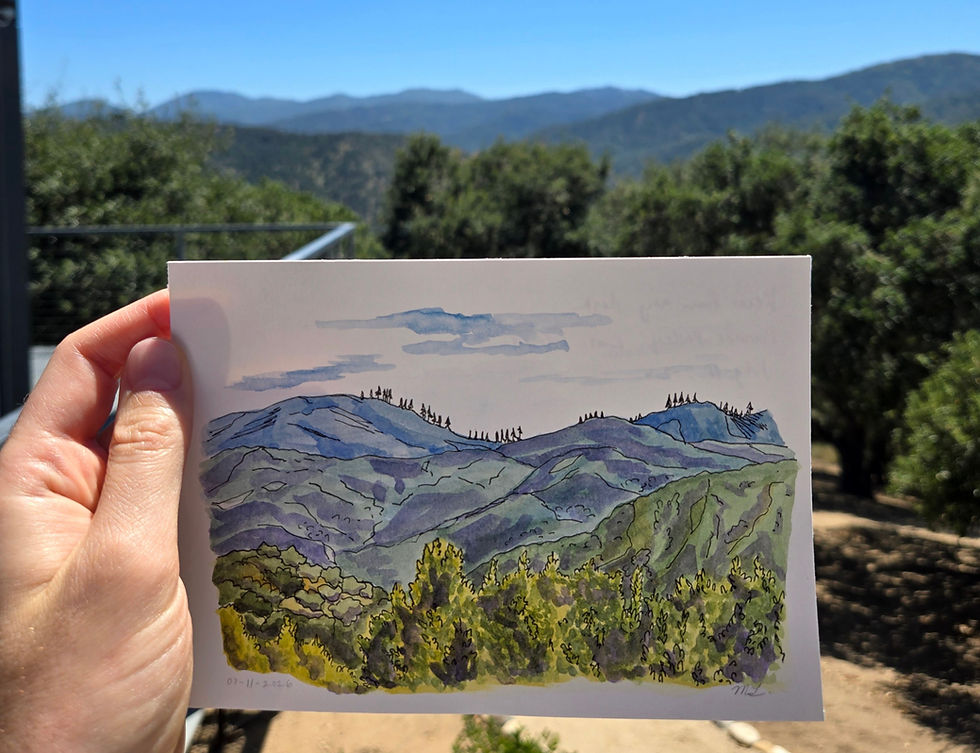
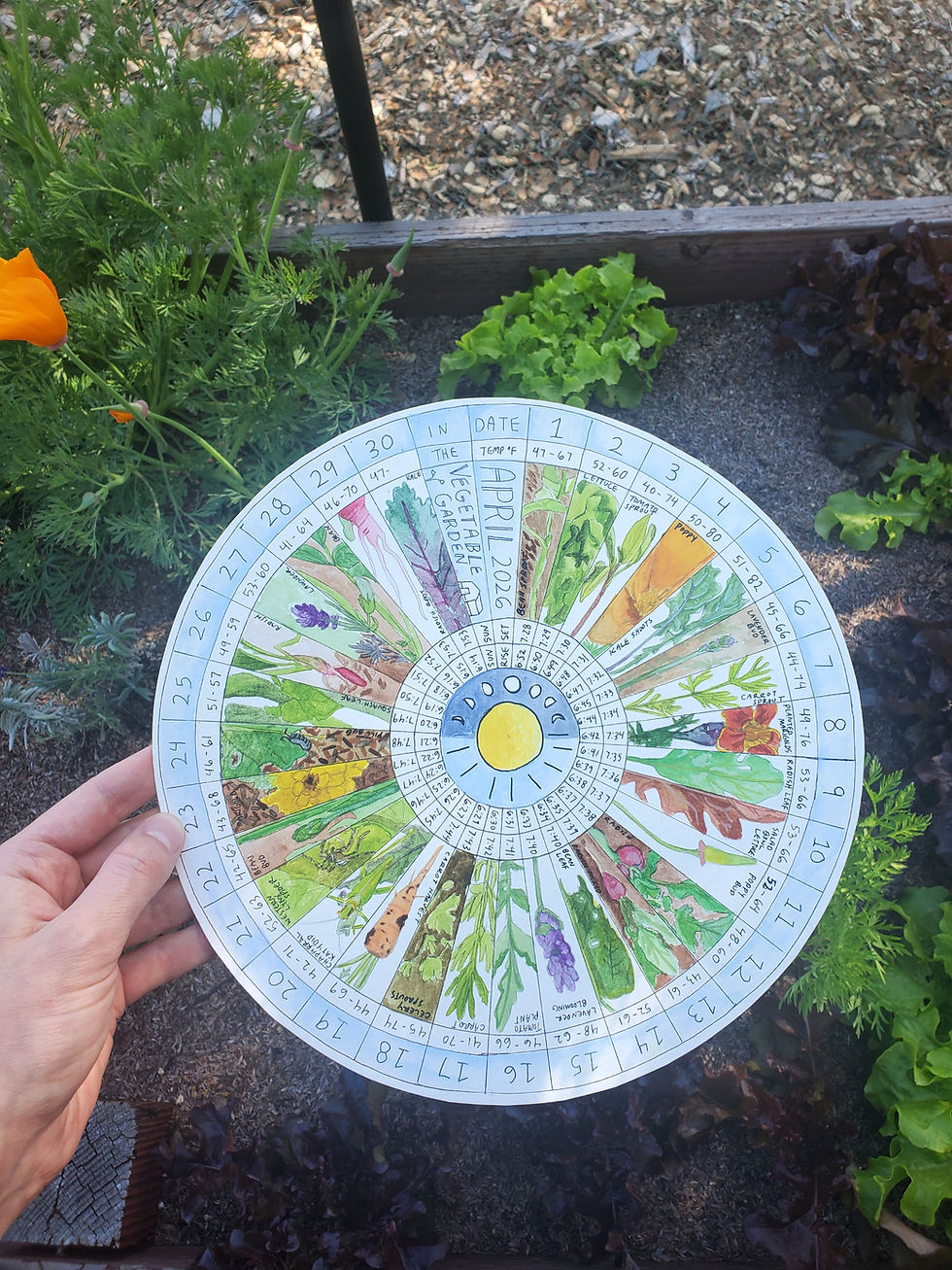
It means observing nature where and when I can, sitting outside to sketch, or snapping photos to look at later. It can simply be watching the trees sway in the wind outside my bedroom, noticing the hawks on the electrical wires as I drive home, or seeing what birds are around when I walk the dog.
Slow art is in kinship with the noticers and observers of the world.
What inspires you and how can you engage with it directly?
5. Taking a break from social media
Related to the previous point, I haven’t been posting much on Instagram lately. There’s a lot of reasons for that, mainly to do with my own mental health, but partly because it feels impossible to keep up with the pressure (whether intentional or unintentional) that feels pervasive there.
It’s a culture of instant gratification and high turnover of content, which doesn’t lend itself to creating slowly.
I’m embracing slower forms of sharing, like my email newsletter and blog, and frankly I’m loving it and don’t miss Instagram at all. I feel less pressure to constantly be making something new or sharing exactly what I’m working on, thinking, and feeling every day.
6. Cultivate empathetic joy, not envy
This is a Buddhist practice that’s applicable to all aspects of life, but I’ve noticed how it helps me as an artist. The idea is when someone else is feeling joy you can experience their joy vicariously.
If I see another artist doing something I want to do, I try practicing empathetic joy instead of feeling like I need to go out and do that thing. I can be happy that they are doing that thing so I can see it/buy it/enjoy it and so others can too.
I don’t feel the need to rush out and buy new art supplies and start a new project. Instead I can stick with what I’m working on already and be happy.

7. Make less art
The very nature of creating slowly means that I will make less art as a result. If I’m taking more time with a painting, I will naturally create less paintings overall. That’s okay.
I’m allowing something to develop that will be more rewarding in the long run than ten extra paintings that I wasn’t invested in. I’m focusing on the quality of the work over the quantity.
Another aspect of this is that I’m giving more attention to the art I do create. I’m talking about it more. I’m writing about it. I’m sharing it more. I put in the hard work to create something, so why shouldn’t I value it for a long time afterward?
8. Trusting the process and myself
I used to feel like if I started a creative project that I had to finish it right away.
My brain was always on fast mode, pushing to the finish line to get through the uncomfortable parts of being self critical. If I left a project without pushing hastily through the “hating it” phase then nine times out of ten I wouldn’t ever finish it.
I was worried I would lose the creative spark if I left it to simmer.
What I’ve found by slowing down and trusting myself and my creative process is that I can do it. There’s no instant gratification for taking my time and I might have to sit through the feelings of hating my work, but the resulting artwork feels more rewarding by far.
Nine times out of ten, I love it in the end and the finished piece feels rooted in my unique perspective.
I hope these ways I’m embracing slow art have inspired you to get out and get creative, slowly! I would love to hear some ways you’ve applied these ideas in your life whether you’re a painter, musician, photographer, etc. Comment and let me know.

Comments