

How to Nature Journal When You Have No Energy
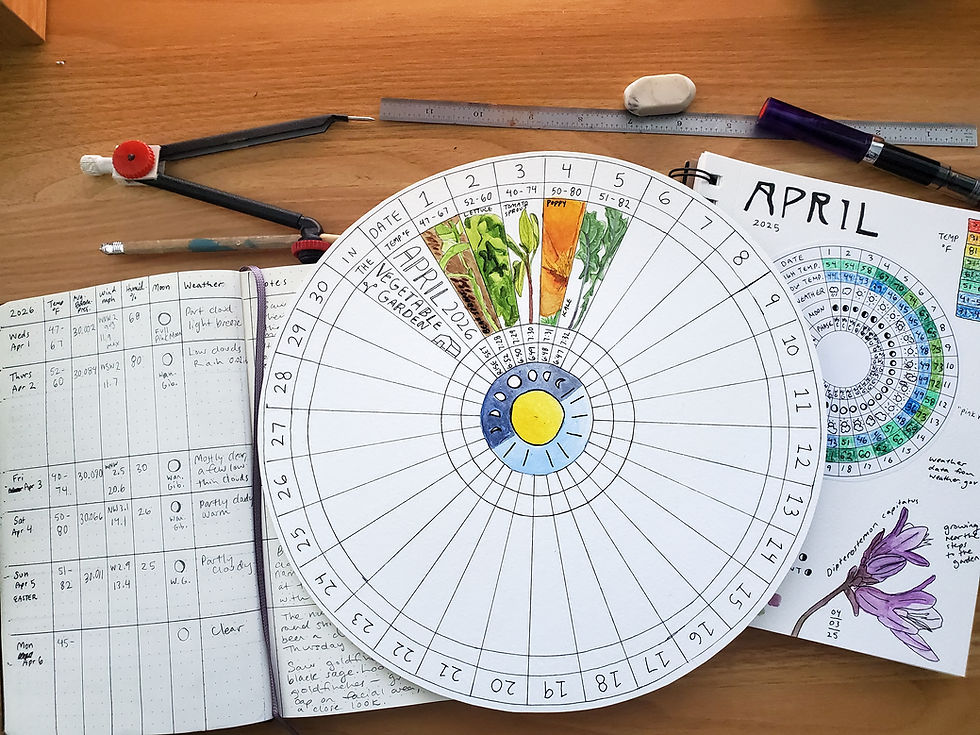
I was going to title this something like "Tips for Nature Journaling with Chronic Illness" or "Accessible Nature Journaling" but I realized that these methods, tips and tools are great for everyone who wants to nature journal but can't seem to find the time or energy.
There’s lots of talk about nature journaling being accessible— you can do it wherever, whenever, whoever you are— but in actual practice, it can be difficult to figure out how to make it accessible for chronic pain, illness, and other disabilities. If you’ve struggled to make it work for you, know that you aren’t alone. Many of us feel shame and embarrassment when our needs look different than the people around us. After years of trying to journal the way that everyone else does, I’ve finally accepted that my nature journal may look different and that’s okay.
If you have chronic illness and/or disabilities*, you can start and maintain a nature journaling practice that works with your body instead of against it. I’m going to share with you some of the ways that I’ve adapted my nature journaling practice to be accessible for me, including methods I personally use (and the philosophy I’ve adopted), tools and alternative types of journals, and how to bring nature indoors.
*I’m going to be using the term “chronic illness and disabilities” as a catchall to encompass chronic pain, illness, physical disabilities, learning disabilities, and mental health conditions. Even if you don't fit into one of these categories (1 in 4 people in the U.S. have some type of disability), these methods are fun ways to keep a nature journal that don't require a lot of time and energy, something we all have in short supply these days.
For the sake of brevity, I’m going to assume you know a little about nature journaling already and have probably tried to keep a nature journal a few times, maybe on your own or in a workshop or class. If you want some background info on nature journaling in general, you can check out the Wild Wonder Foundation. Most of what follows is based on my personal experience through experimenting with different nature journal methods and tools throughout the last three years.
There are many, many ways to facilitate access to the outdoors and nature journaling and I could not possibly list them all here, these are just some of the ways I’ve come up with or use for myself. I hope they are helpful for you and get you thinking about how to support your personal connection with the Earth in the way that works best for you.
Nature Journal Methods - Little and Often
I’ve started using a “little and often” approach to nature journaling and it’s working well for me. Here are some methods that fit well with this philosophy, allowing me to spend short periods of 5-15 minutes recording daily observations, but building a consistent practice that encourages me to notice tiny things happening in nature around me without using too much of my precious energy. Even though I’m spending a short amount of time each day on my nature journal, I’m rapidly building up a collection of observations because of doing it little and often, which encourages me to keep going each day.
A Naturalist’s Journal
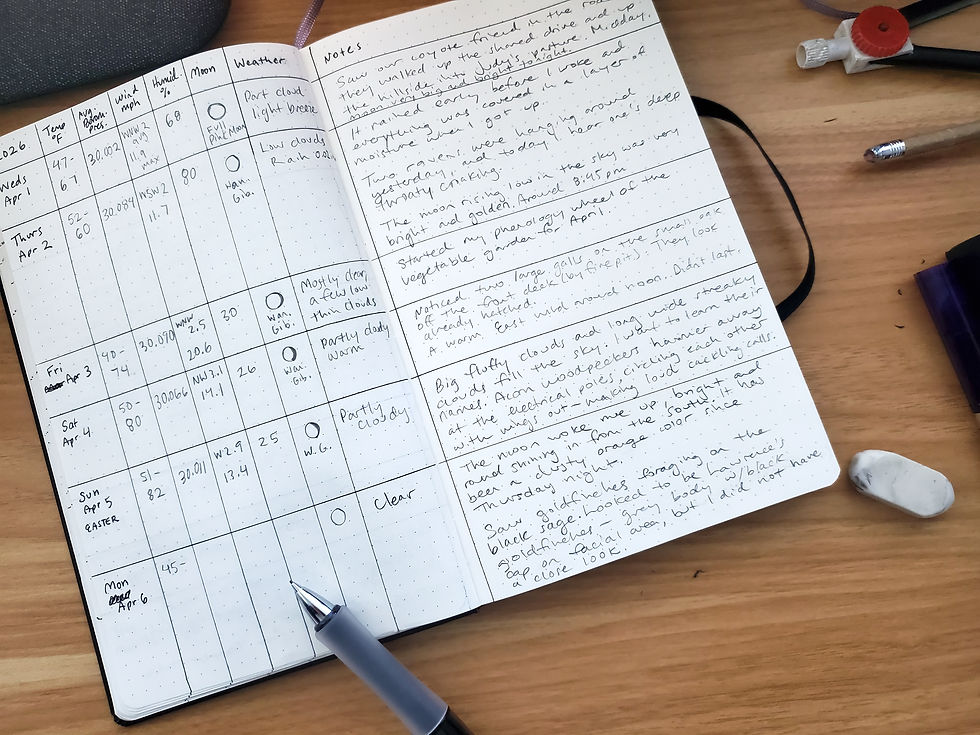
Inspired by Gilbert White’s naturalist’s journals from the 1700s, I’ve started recording some simple weather data with one or two observations from the day; a bird I noticed, a flower blooming, etc. Sometimes I write a few words, sometimes I write several sentences. I make my own chart in my journal each week, but you could easily create a template and print it out.
I’ve tied mine to my home. I take note of one or two things while taking the dog out in the morning, write them down and fill out the weather data while eating breakfast. I like that the journal is becoming a snapshot of a place that’s important to me, and making me feel more in tune with the land I live on.
Make your daily observations of somewhere you already spend a lot of time, like your backyard, the tree you stare at out the window from your bed, the patch of sky visible from your apartment, even your house plants (more on bringing nature indoors down below).
Phenology Wheels
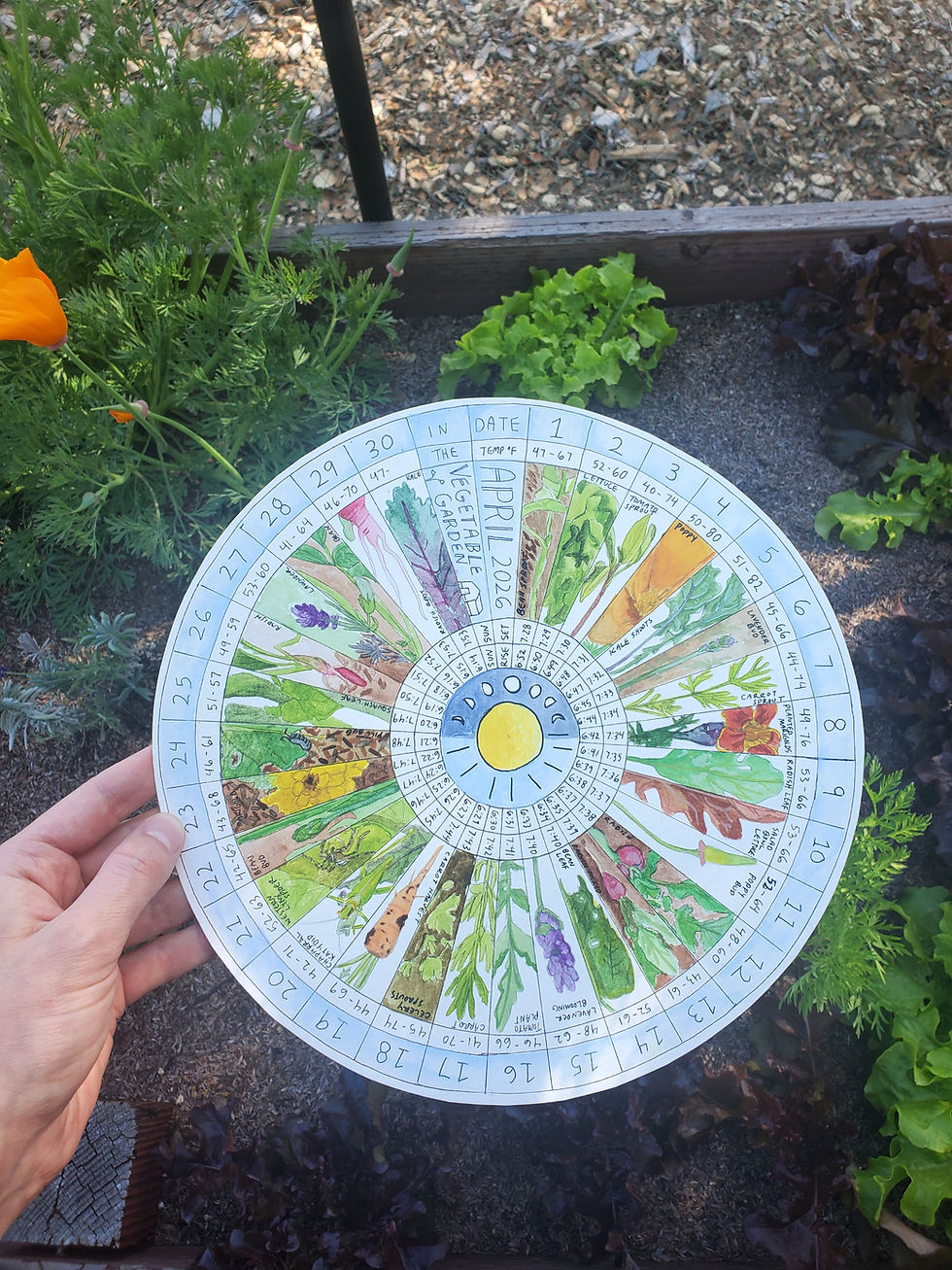
I’ve been getting really into these and I’m going to be writing a whole blog on them next month. All of nature is cyclical, so using a wheel to track changes over time just makes sense.
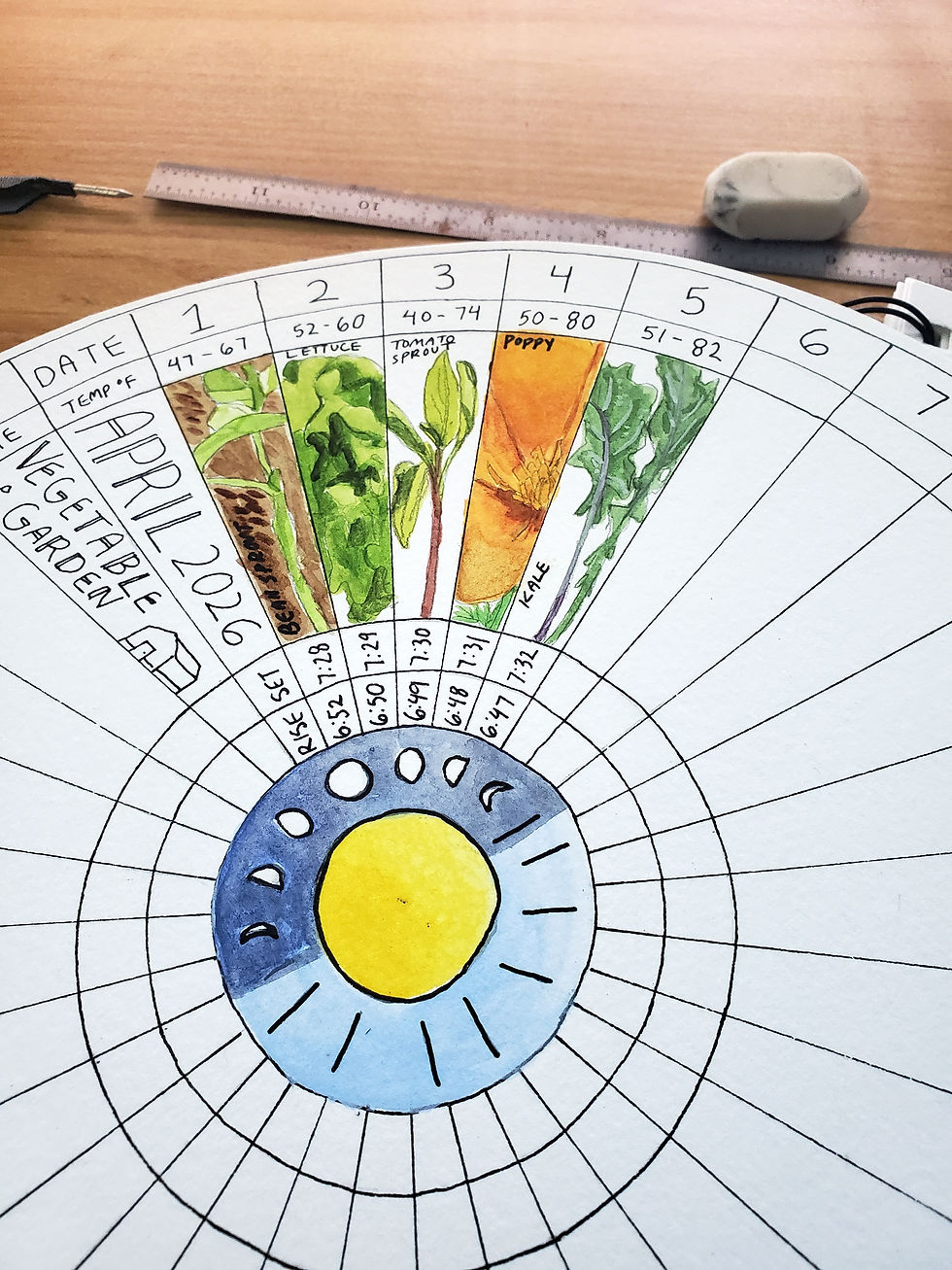
It takes a little set-up but once you get it going it’s simple to fill in once a day. Divide a circle into equal sections (you can do 32 sections for a daily observation wheel of one month, 4 for a seasonal year wheel, 12 for a month-to-month wheel). I used the method from YouTuber Marion’s World to make my wheel. Get creative and make up your own sections, document whatever you want! It’s easy to find printable wheel templates online to make this even easier to get started. Go big: if you have difficulty writing and drawing small, use a large sheet of paper.
Next month’s blog will be all about phenology wheels; how to make one and some of the history of the wheel as a representation of nature’s cycles. You can also come and make a phenology wheel in the garden with me at MEarth Day on May 9th.
Tools and Alternative Journals
There are also lots of great adaptive drawing and writing tools out there, which I won’t be going into detail about here but some things you can look into if you struggle with hand pain and writing difficulties are: pencil grips and foam utensil grips, pencil weights, oversized and triangular pencils, ring splints, and thumb braces.
There’s nothing wrong with using tools, adaptive equipment, and even technology when nature journaling. Expanding the definition of a nature journal means using the tools that work for you to help you connect with nature. There’s a push in the arts and outdoor community to get back to analog means of creating and connecting with nature, and this is good and something I’ve enjoyed doing myself, but we are forgetting the many benefits of technology for people with disabilities. Here are some alternative types of nature journals that you might not have thought of.
Photos: use your phone or small camera to take snapshots of nature
Take a photo of the same view every week for a year and see how it changes.
Or chart the changes in a specific tree through weekly photo documentation.
You can make a photo album on your phone called "My Nature Journal" to keep everything organized
Create digital collages or slideshows
Video: take short video clips and make personal vlogs of your week/month/year in nature. You don’t have to share them with anyone, but you can if you want to.
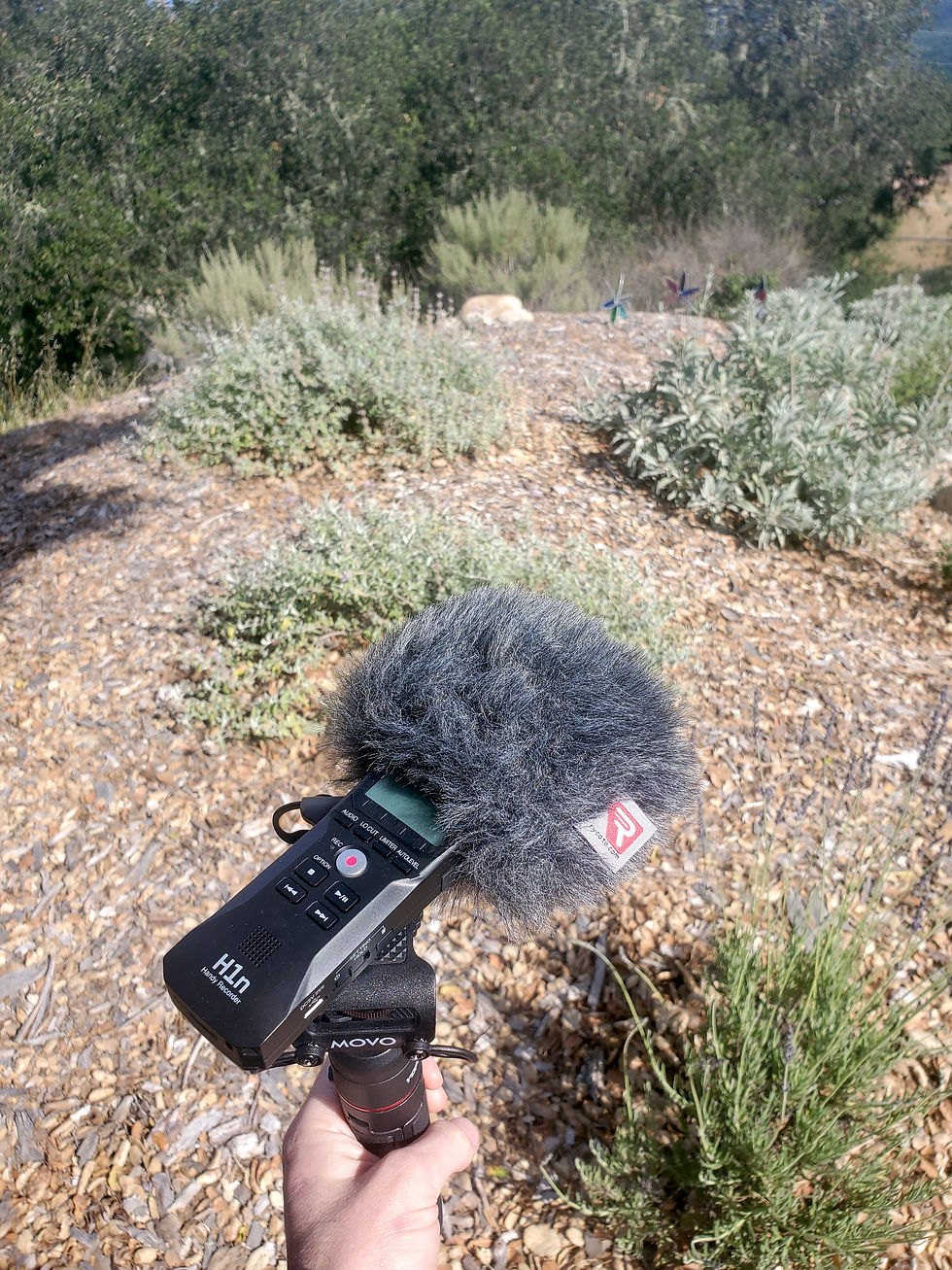
Sound recording: use your phone, cheap digital recorder, or a fancier field recording device (I use the Zoom H1n) to record nature sounds and your observations. You can speak your observations and notes into the recording device too.
Nature journal on your tablet or computer: if writing on a tablet or typing on a computer is easier for you, you can record your observations this way. Combine them with your photographs.
Sensory journaling: use leaves and other fallen pieces of nature to collage in your journal. Please don’t take cuttings or collect excessively, especially from public areas and definitely don’t take from state or national parks and other protected areas.
Physical Comfort Outdoors
Here are some things I recommend for making yourself comfortable when journaling outside:
Comfy chairs or cushions. Bring a pillow, there are no rules.
Gardening stools/pads. I often bring a gardening knee pad to sit on to protect my tailbone which gets sore easily.
Portable chairs and stools. These range from more comfortable(heavier) to less comfortable(lighter and more portable) but can be a great option to take with you when venturing away from home.
Wheelchairs/scooters/rollators. These can help you go farther, carry more, and be more independent outside. If you’re not regularly using these tools, you can look into renting one for an excursion.
Bringing Nature Indoors
If you aren’t able to go outside, or maybe aren’t even able to leave your bed most days, there are still ways you can nature journal. Combine one of the above methods of nature journaling and see what you can journal about that’s within your range. This might look like documenting the changes in a house plant, a vase of flowers, or the fruit and vegetables on your kitchen counter.
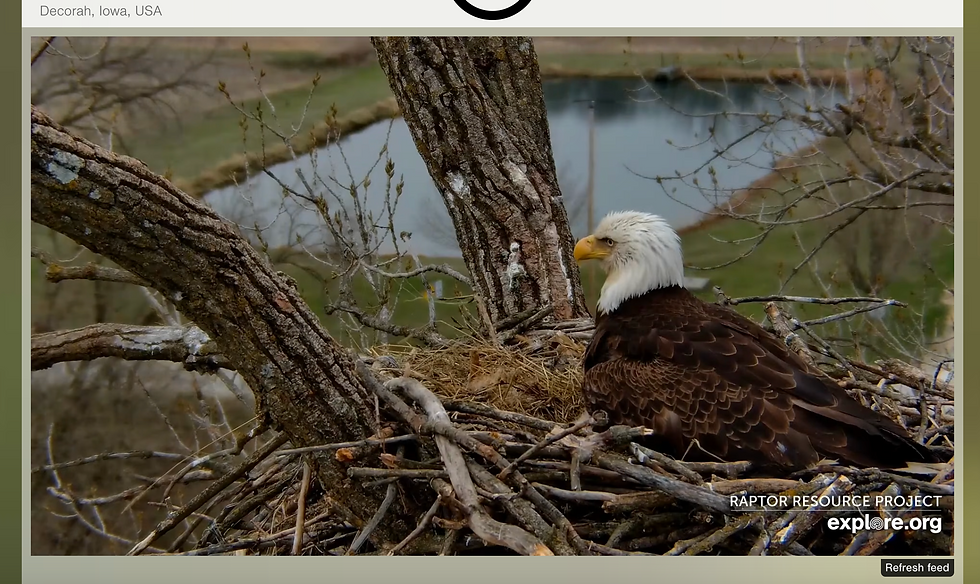
Another way I love to bring nature journaling indoors is through virtual field trips. Using live (or recorded) video footage you can take a trip to see nature across the world. I love the explore.org cameras, Monterey Bay Aquarium live feeds, and MapCrunch for this.
Nature in Flux
One thing I have learned from nature journaling is that nature is not exactly the same from one moment to the next, even though we can notice cycles repeating themselves each year, it’s never exactly the same twice. We see this when we track our observations of nature over time. As humans we are also all in a constant state of flux, because we’re a part of nature too. Keeping a nature journal has helped me to see my own changeability, the inconsistencies in my health which feel limiting and disabling, as part of the natural course of life.
Not only is nature journaling possible for you, but it can become a source of joy and connection that many of us with chronic illness and disability who feel isolated will benefit from. There is a community of nature journalers out there just like you.
I hope you enjoyed these ideas. I would love to hear how you’re making nature journaling accessible for you.
Comments